DepEd Binalonan - Home

FOUR THEMATIC AREAS DRRM

The four thematic areas of Disaster Risk Reduction and Management (DRRM), particularly in the Philippines, are (1) Disaster Prevention and Mitigation, (2) Disaster Preparedness, (3) Disaster Response, and (4) Disaster Rehabilitation and Recovery. These pillars, mandated by the NDRRMP 2011-2028, aim to reduce disaster risks and build community resilience.

Disaster Prevention and Mitigation

Disaster Prevention and Mitigation focuses on avoiding hazards and reducing their possible impact through activities like risk assessment, hazard mapping, and strengthening infrastructure.


🟥

  • Disaster Prevention and Mitigation (DRRM): Aims to avoid hazards and reduce their potential impacts on communities before disasters occur. It involves identifying risks through hazard mapping, conducting risk assessments , implementing proper land-use planning, and strengthening infrastructure and environmental protection measures. This thematic area is part of the national DRRM framework under the Republic Act No. 10121 and is implemented by the National Disaster Risk Reduction and Management Council (NDRRMC) together with relevant government agencies and local government units.
📚 Resources from..

These are anchored in the Republic Act No. 10121 and further defined in the National Disaster Risk Reduction and Management Plan (NDRRMP) 2011–2028. These are implemented by the National Disaster Risk Reduction and Management Council (NDRRMC) and supported by agencies such as the Department of Education (DepEd).
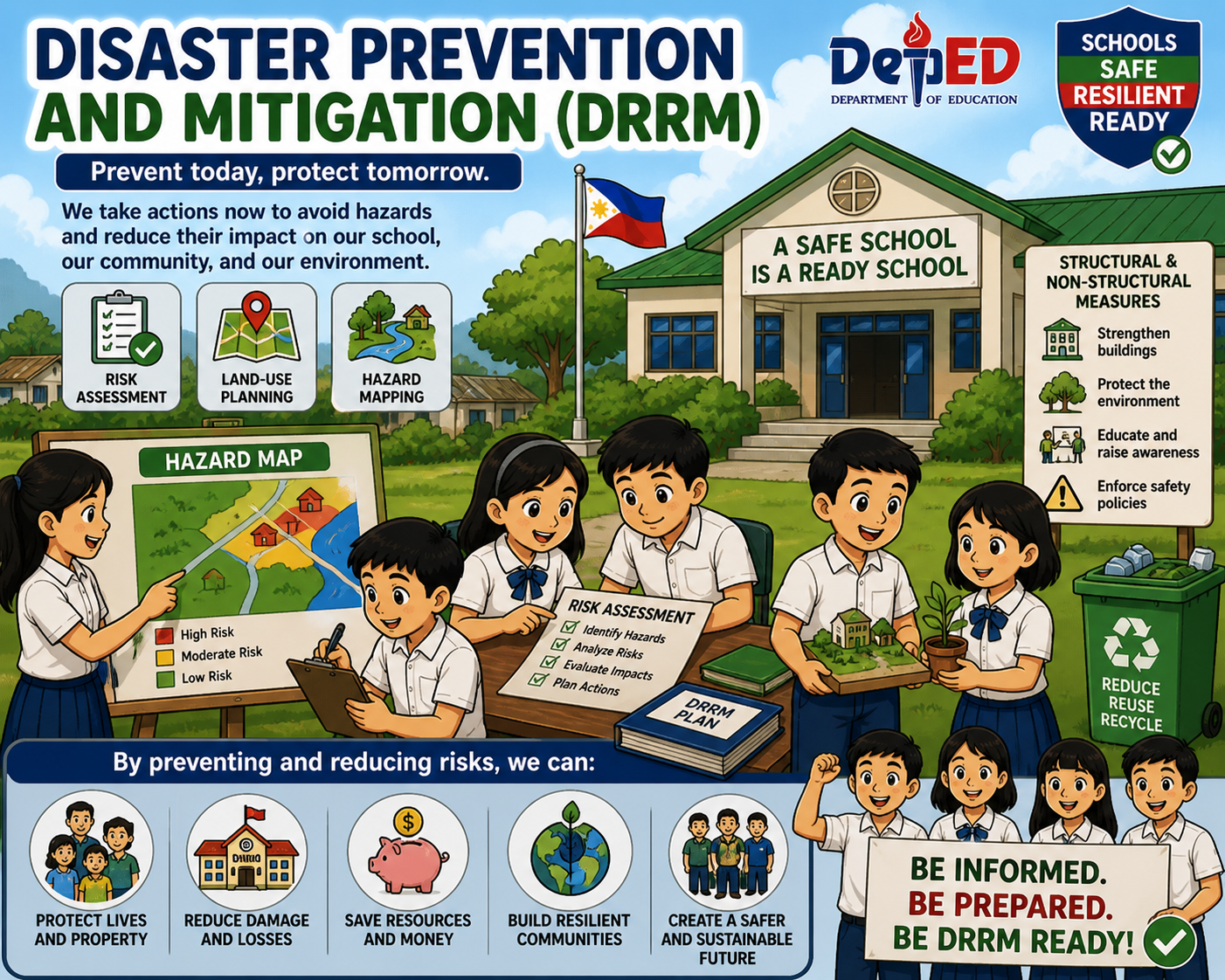
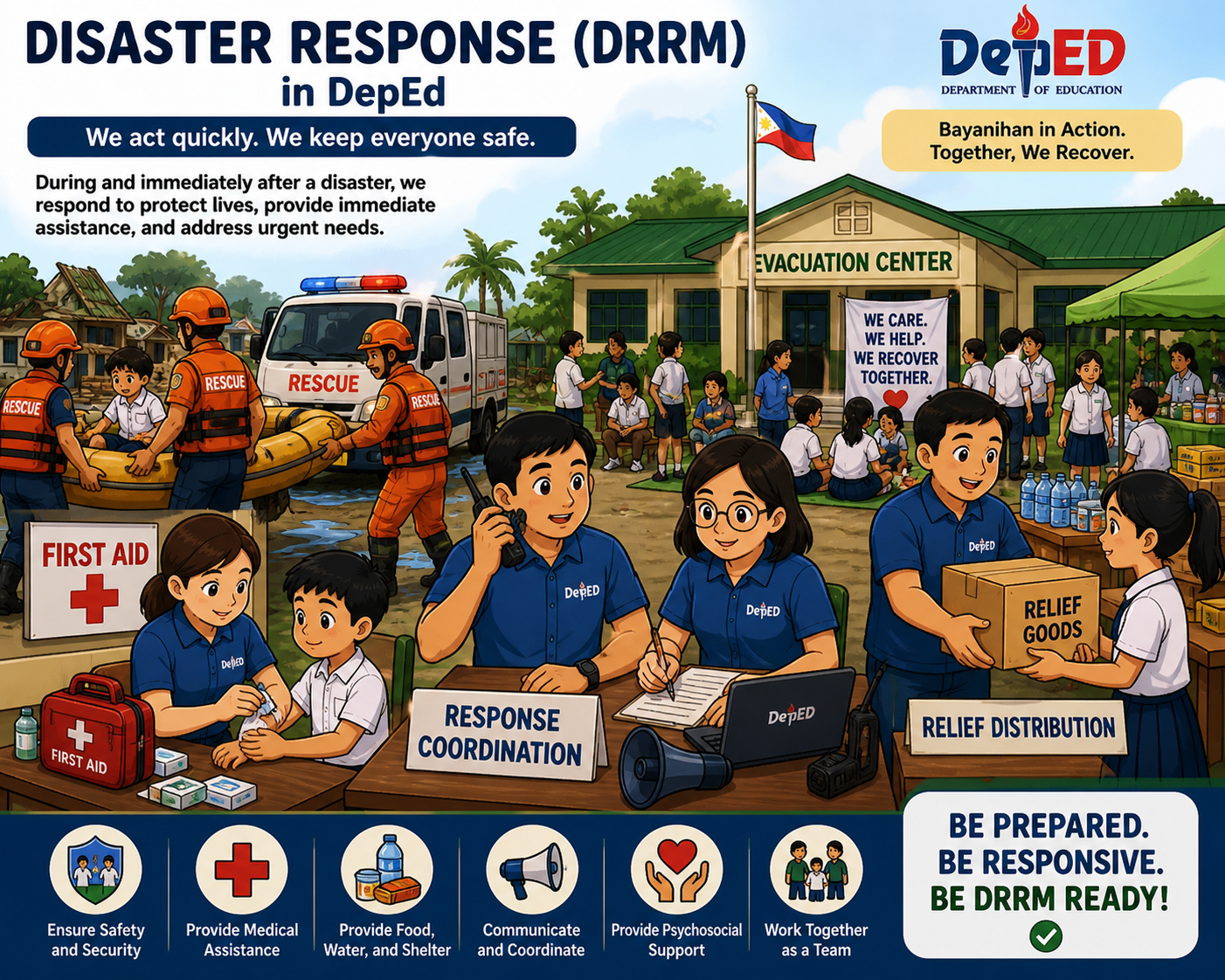
Image Generated using AI

Disaster Preparedness

Fire safety
Image generated using AI

Disaster Preparedness involves planning and preparing communities through drills, training, and early warning systems.


🟥

  • Disaster Preparedness (DRRM): Focuses on strengthening the capacity of communities, institutions, and systems to anticipate, respond to, and recover from potential disasters. It includes establishing early warning systems, evacuation planning, conducting drills and trainings, and building the skills and knowledge needed to reduce disaster risks. This thematic area is implemented by the National Disaster Risk Reduction and Management Council (NDRRMC), with support from agencies such as the Department of the Interior and Local Government (DILG) and the Department of Education (DepEd), in accordance with Republic Act No. 10121.
📚 Resources from..

These are anchored in the Republic Act No. 10121 and further defined in the National Disaster Risk Reduction and Management Plan (NDRRMP) 2011–2028. These are implemented by the National Disaster Risk Reduction and Management Council (NDRRMC) and supported by agencies such as the Department of Education (DepEd).

Disaster Response

Disaster Response refers to actions taken during and immediately after a disaster, such as evacuation, rescue operations, and providing relief assistance.


🟥

  • Disaster Response (DRRM): Pertains to the actions taken during and immediately after a disaster to ensure the safety and survival of affected communities. It focuses on providing emergency assistance such as evacuation, medical services, food, water, and temporary shelter, as well as conducting rescue operations and coordination of relief efforts.
📚 Resources from..

This thematic area is implemented under the framework of the Republic Act No. 10121 and coordinated by the National Disaster Risk Reduction and Management Council (NDRRMC), together with agencies such as the Department of Social Welfare and Development (DSWD) and other government and local units to address immediate disaster needs effectively.

Earthquake safety
Image generated using AI

Rehabilitation and Recovery

Fire safety
Image generated using AI

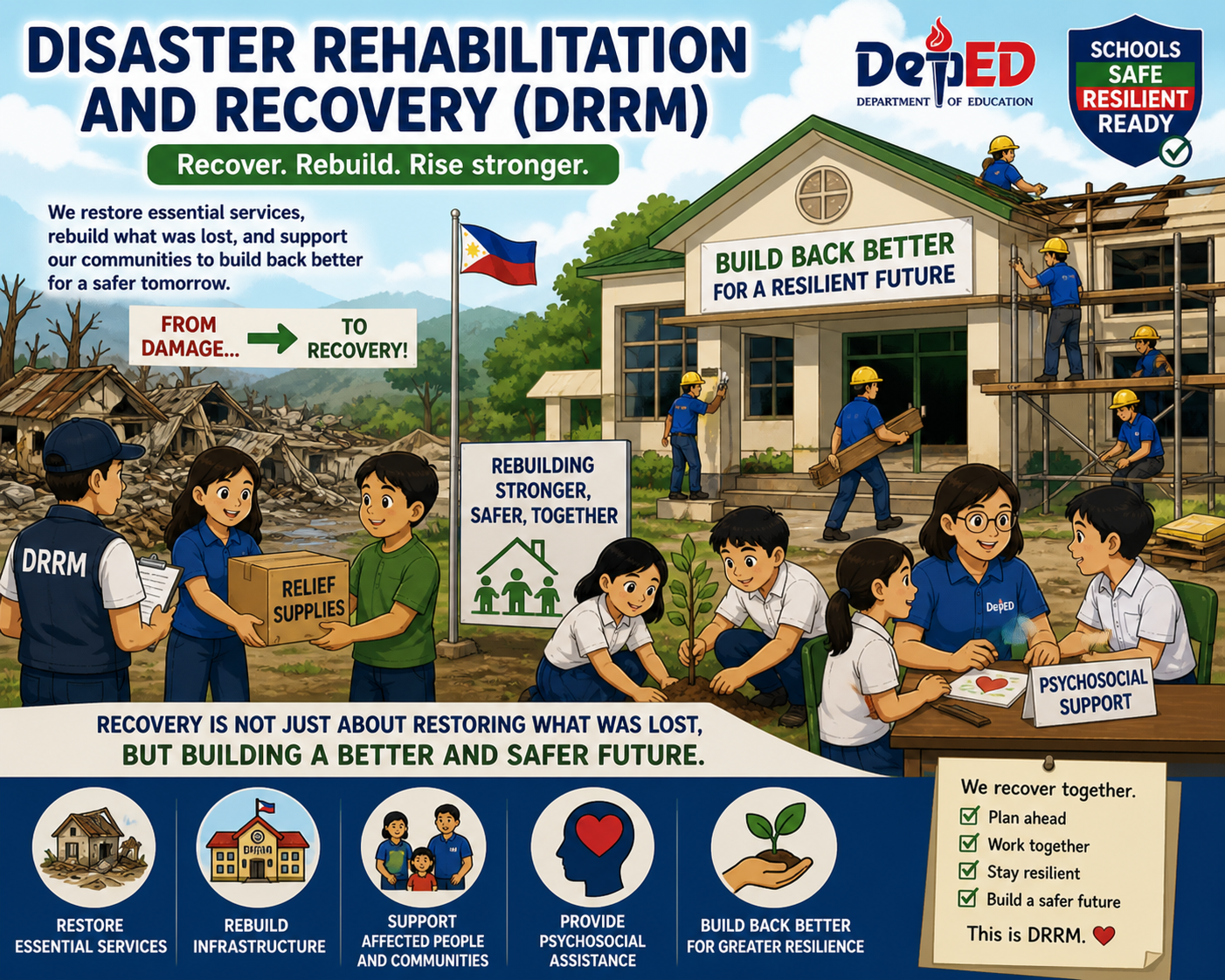
Rehabilitation and Recovery focuses on restoring affected communities, rebuilding damaged structures, and helping people return to normal life.


🟥

  • Disaster Rehabilitation and Recovery (DRRM): Focuses on restoring normal conditions and improving communities after a disaster has occurred. It involves rebuilding damaged infrastructure such as schools and public facilities, restoring essential services, supporting affected individuals and families, and providing psychosocial assistance to help communities recover. It also promotes the principle of “build back better,” which aims to make communities more resilient to future disasters. Disaster Rehabilitation and Recovery (DRRM): Focuses on restoring normal conditions and improving communities after a disaster has occurred. It involves rebuilding damaged infrastructure such as schools and public facilities, restoring essential services, supporting affected individuals and families, and providing psychosocial assistance to help communities recover. It also promotes the principle of “build back better,” which aims to make communities more resilient to future disasters. This thematic area is implemented under the framework of the Republic Act No. 10121 and coordinated by the National Disaster Risk Reduction and Management Council (NDRRMC), together with agencies such as the National Economic and Development Authority (NEDA) and local government units.
📚 Resources from..

These are anchored in the Republic Act No. 10121 and further defined in the National Disaster Risk Reduction and Management Plan (NDRRMP) 2011–2028. These are implemented by the National Disaster Risk Reduction and Management Council (NDRRMC) and supported by agencies such as the Department of Education (DepEd).